

A working smoke detector cuts your risk of dying in a home fire by half. We reviewed 12 models to find the five worth trusting.







Why you can trust SafeWise
products considered
250+
research hours in 25+ in-home tests
10k+
years of combined experience
176+
homes and people protected
10M+
For over 13 years, SafeWise experts have conducted independent research and testing to write unbiased, human reviews (not robots). Learn more.


 8 min read
 Edited ByRebecca Edwards
Alina writes for MSN, MTV, and CBSNews, blending safety expertise with her passion for simplifying technology. Alina was also trained as a first responder and worked as a volunteer firefighter.

Last Updated: 1 week ago
Updated the SafeWise pick and verified all info, availability, and pricing.
It’s easy to forget your smoke alarm’s there until it starts beeping or chirping. But while we take them for granted, they’re always keeping tabs on fire safety.
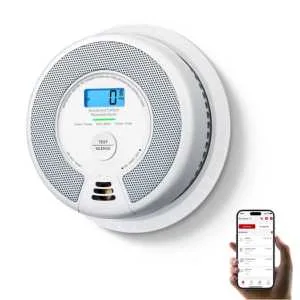
Our top pick, X-Sense, is inexpensive, but all its extras, like its carbon monoxide alarm, will surprise you. It offers remote notifications, voice notifications, and more.
What are the best smoke detectors of 2026?
- : SafeWise pick: best overall
- : Best battery
- : Best wired
- : Best battery changes
- : Easy to use
Compare smoke detectors and alarms
Smoke detector | Best for | Price | Sensor type(s) | Carbon monoxide detector | Smart features | Power | Learn more |
| Best voice alerts | <$30.00 | Photoelectric (smoke) and electrochemical (CO) |  Yes Yes
| Yes
| Battery | View on X-Sense | |
| Best battery | <$40.00 | Ionization | Yes
|  No No
| Battery | View on Amazon | |
| Best wired | ~$60.00 | Electrochemical, photoelectric | Yes
| No
| Wired | View on Amazon | |
| Best battery changes | ~$45.00 | Ionization | No
| No
| Wired | View on Amazon | |
| Easy to use | ~$65.00 | Photoelectric, ionization | No
| No
| Battery | View on Amazon |
Info current as of post date. Amazon.com price as of post date. Read full disclaimer.
What to consider when buying a smoke detector
In 2024, the National Fire Protection Association reported that three out of five home fire deaths happen in homes with no working smoke alarms or alarms that failed to activate. If you have working smoke detectors in your home, you’ll have a better chance of getting everyone out safely. While any smoke detector is better than none, here are a few things to look for when buying a new smoke alarm.
Multifunctional
The best smoke alarms can detect smoke particles, flames, and carbon monoxide. A multifunctional alarm can save you battery life or energy from your house for hard-wired smoke detectors. Combination smoke, fire, and carbon monoxide detectors are easier than ever to find.
Smart
While classic ionization and photoelectric smoke detectors are helpful, smart smoke detectors are the cutting edge in fire safety. They communicate through apps and deliver alerts to your phone or other mobile devices if an alarm sounds.
Smart alarms can talk to each other too, so you’ll know exactly where the fire is when an alarm is triggered. The only downside is that smart devices are more expensive.
Backup power
If your home's power goes out, you still need to know if there's a fire or smoke emergency. Hard-wired smoke detectors need to have a battery backup or some other backup power source to keep them running.
If the power goes out, it takes your smoke detector with it. Battery powered smoke detectors should have a test button or chirp when the battery starts to drain.
1. X-Sense: Best digital display
Best voice alerts
If you want a smart combo alarm that won't break the bank, the X-Sense SC07-W is hard to beat. It detects both smoke and carbon monoxide, sends alerts to your phone even when you're not home, and has an optional 24/7 fire dispatch service. The voice alerts are especially useful — instead of a generic siren, the alarm tells you whether it's smoke or CO and where the danger is, which helps you react faster.
It's a practical choice for renters and homeowners alike who want Wi-Fi monitoring without paying for a premium brand.

Pros
 Dual smoke and CO sensors
Voice alerts name the threat
Wi-Fi connected with real-time app notifications
UL certified and California Fire Marshal approved
Option for 24/7 fire dispatch service
Dual smoke and CO sensors
Voice alerts name the threat
Wi-Fi connected with real-time app notifications
UL certified and California Fire Marshal approved
Option for 24/7 fire dispatch service 
Cons
 2.4 GHz only — incompatible with 5 GHz networks
Battery lasts roughly one year before replacement
2.4 GHz only — incompatible with 5 GHz networks
Battery lasts roughly one year before replacement 
Don't miss these X-Sense deals!
- Save 13% sitewide with code BRANDREWARD (valid through June 30)
- Father's Day Sale! Up to 40% off selected smart home sensors.
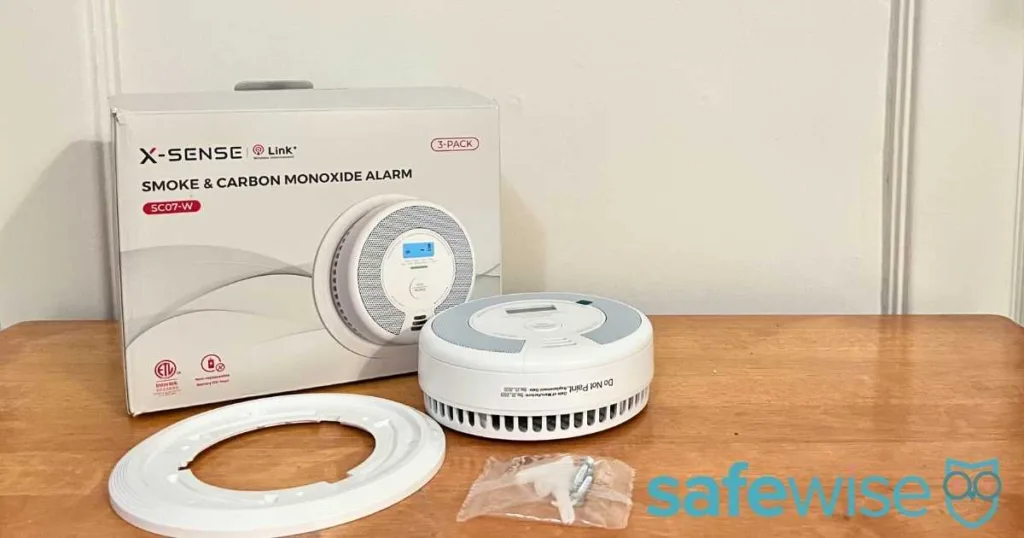
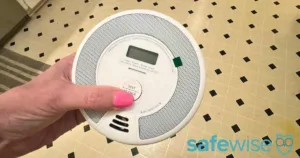
Our Managing Editor preparing to test the X-Sense SC07-W smoke and carbon monoxide alarm. Image: Rebecca Edwards, SafeWise
X-Sense SC07-W combo alarm
We're currently testing the interconnected X-Sense SC07-W combo smoke and CO alarm. We like that its primary purpose is protecting your home and loved ones — no apps, Wi-Fi connections, or subscriptions needed. Learn more in our full review.
2. First Alert SMICO100: Best battery
Best battery
The First Alert SMICO100 not only detects smoke–it also detects unsafe levels of carbon monoxide (CO) in your home. Carbon monoxide is a colorless, orderless gas that can be deadly. Getting a CO detector is important because this gas is impossible to detect on your own.
Pros
Alerts you when your smoke or CO detector goes off
10-year battery Cons
No voice alerts Our favorite part is the battery life, though. There's nothing more annoying than the low battery beep from smoke detectors. Install this one and you won't need to worry about the beep, or changing the batteries for up to 10 years.
Our guide can help you learn more about CO detectors and the dangers of carbon monoxide gas.
3. First Alert SMCO100V-AC: Best wired
Best wired
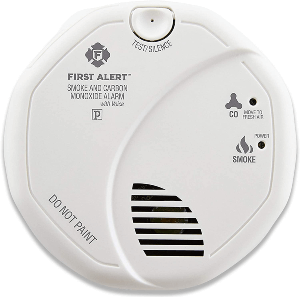
The First Alert SMCO100V-AC is a great, more affordable alternative to the Google Nest. It features voice and location alerts, as well as smoke and CO gas detection. Plus, First Alert has been around since 1958 and is highly trusted.
Pros
Trustworthy
Affordable
Smoke and CO detection
Voice and location alerts Cons
Wired only
No home automation compatibility We really like that this alarm doesn't just beep. It tells you if there's a fire or CO gas and the location of the problem, making it easier for you to get out safely.
While it's a hardwire installation, the SMCO100V-AC comes with an easy plug-in design to make things easier.
Smoke detectors for people with hearing loss
If you or someone in your family experiences hearing loss or deafness, a wire-in strobe light can help. These devices connect with your existing smoke and fire alarms. When the smoke detector senses danger and sounds the alarm, the strobe light will flash to signal trouble.
4. Kidde Hardwired Smoke Detector: Best battery changes
Best battery changes
With the Kidde hardwired smoke detector, changing batteries has never been easier. It’s simple to keep this smoke detector ready for action with the slide-load battery door on the front. This is the only smoke detector on our list with a quick-change battery.
Pros
Quick-change battery
Interconnectable Cons
No voice features This Kidde smoke alarm is also easy to install and can be interconnected with other alarms to create a full-house smoke detection system. It can connect to up to 18 other devices, depending on the model of the other devices.
5. First Alert Precision Detection: Easy to use
Easy to use
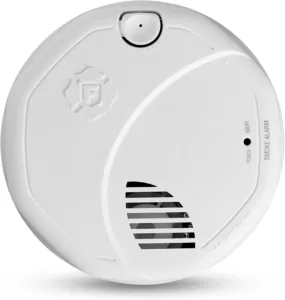
The First Alert BRK 3120B is dual-sensor smoke alarm that detects multiple kinds of fires and decreases false alarms. It has both photoelectric and ionization sensors.
Pros
Reduces false alarms
Detects multipule kinds of fires Cons
No carbon monoxide sensor Say goodbye to shrieking beeps while you’re cooking or after a hot shower. The First Alert's photoelectric smoke detector sensor is sensitive enough to tell the difference between everyday activities and real threats like a smoldering fire.
While we like this one, it has some shortcomings. Even with two smoke sensors, it doesn’t come with carbon monoxide detection.
Video: What Else Sets Off Smoke Alarms?
Subscribe to our YouTube channel and learn how to protect your home, loved ones, and belongings.
Types of smoke detectors
Smoke alarms typically have three types of sensors: ionization, photoelectric, and dual. Here are the main differences between the three.
Photoelectric
Photoelectric smoke alarm sensors use light to detect smoke. When smoke particles are suspended in the air (as with a smoldering fire) the particles scatter the beam of light in the sensory chamber, which sets off the alarm.
Ionization
Ionization smoke detectors use radiation and an ionization chamber to detect smoke. The ionizing radiation helps detect small amounts of smoke in the air, as with a flaming fire. When smoke enters the sensor chamber, the current of the ionizing radiation is disrupted, which triggers the alarm.
Dual sensors
Dual sensors include both photoelectric and ionization sensors. These are considered the safest smoke and fire detection devices. Because they detect both flaming fires and smaller, smoldering fires, it’s unlikely that any fire-related danger will get past these double-duty sensors.
Smoke detector installation and maintenance
Smoke alarms can save a life, but they have to be properly installed and maintained. Don’t risk your family’s safety—use these tips to keep your smoke detector alarm in tip-top shape.
Check batteries: According to a report from the National Fire Protection Association (NFPA), dead batteries are a major factor in smoke alarm failures. In fact, the reported death rate from a home fire is 50% lower in homes with working smoke alarms.
A smoke detector won’t do you any good if it isn’t working, so make sure to check your batteries every month and use the “test“ button intermittently to ensure proper function.
Arm every level: The National Fire Protection Association (NFPA) recommends putting a smoke detector on every level of your home: in every bedroom, outside every sleeping area, and in your basement. On floors without bedrooms, install alarms in the living area or near stairways.
If you have a large home, consider adding even more to cover the whole footprint.
Mount high: Smoke rises. It’s important to put your smoke detectors within a foot of your ceilings and 10 feet from cooking areas.
For vaulted ceilings, avoid putting smoke detectors in the “pitch” of the roofline. Instead, mount fire alarms 3 feet below the ceiling so they can accurately read smoke.
Never run out of batteries: Set up recurring delivery for smoke alarm batteries on Amazon. That way, you’ll always be ready to replace a dead battery in your smoke alarm. Time the delivery schedule to match regular smoke alarm maintenance so you’ll never overlook changing out old batteries.
Keep it clean: Dirt and debris interfere with the sensors on your smoke alarm. Dusty buildup can lead to false alarms or delayed detection during an emergency. Whether you have a photoelectric alarm or an ionization detector, regular cleaning will keep your smoke alarm in working order.
Dodge drafts: Keep smoke alarms away from windows, doors, and air ducts. Drafts can disrupt the operation of smoke detectors and increase the occurrence of nuisance alarms.
Get connected: Wired and wireless interconnected smoke alarms help ensure everyone in your home knows about the emergency. You can install the connection easily and it will sound the siren throughout the house using each of your fire alarms. It takes a few extra steps to set up and test, but it means family members in every room will get the warning.
Final word: X-Sense SC07-WX is our pick for best smoke alarm
The X-Sense SC07-WX is a strong choice if you want dual detection, smart connectivity, and voice alerts without paying up for a Google Nest Protect. It's easy to set up, reliable in testing, and the real-time app monitoring adds genuine reassurance. The battery lasts only about a year, and 5 GHz Wi-Fi incompatibility is a small but real gotcha — but neither is a dealbreaker for most buyers.
Bottom line: An affordable, feature-rich combo alarm that punches above its price.
Smoke detector FAQ
If your smoke detector is beeping regularly, it could be because the batteries are running low.
Try changing the batteries first. If the beeping continues, the device may be sending false alarms. Make sure it's far enough from the bathroom or stove to avoid sensing heat or steam any time you use the room.
There are pros and cons to smart smoke detectors, but it boils down to your preference and budget.
Smart smoke detectors connect to your phone, allowing you to know when the alarm sounds when you aren’t home. But these aren’t totally foolproof either. They’re connected to your Wi-Fi, so if your internet connection drops, you may be without protection.
For the best results, we recommend testing your smoke detectors once a month. You’ll always be ready for an emergency and this will prevent false alarms and beeping from drained batteries.
You should have at least one smoke detector per floor and outside of each of your sleeping areas.
Smoke and fire detectors warn you when an emergency happens, but how do you prevent a fire in the first place?
Start with a few common safety practices like careful cooking, cleaning out lint traps frequently, and storing flammable products safely. It's also a good idea to keep a fire extinguisher on hand in the house and show everyone how to use it.
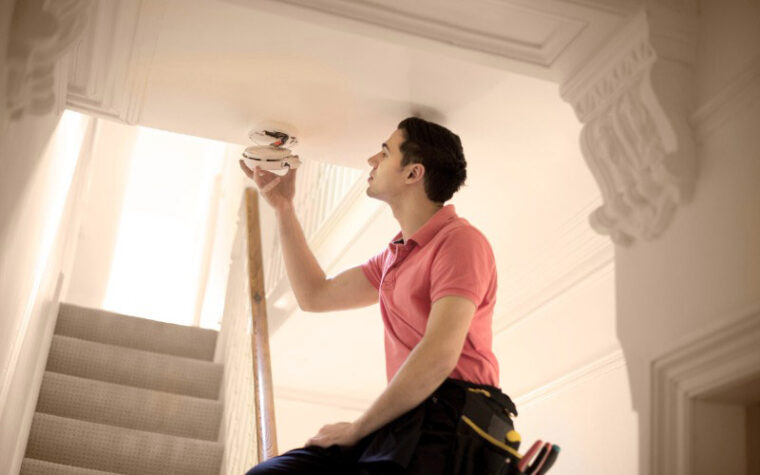
To determine the best smoke alarms, we scoured industry research and evaluated product features, performance, and specs. We also consulted the National Fire Protection Association and US Consumer Product Safety Commission for guidance and pored over expert ratings and real customer reviews.
Our 5 best smoke alarms were selected from 12 top devices that were compared for reliability, effectiveness, price, and customer satisfaction. Learn more about how we conduct reviews like this one from our methodology page.
Disclaimer
Product prices and availability are accurate as of the date/time indicated and are subject to change. Any price and availability information displayed on Amazon at the time of purchase will apply to the purchase of this product. Safewise.com utilizes paid Amazon links.
Certain content that appears on this site comes from Amazon. This content is provided “as is” and is subject to change or removal at any time.
Google, Google Nest Secure, [any other related Google Products] and other related marks are trademarks of Google LLC.


Recent Articles

The Most Burglarized City in Every State
We found the most-burglarized city in every state — it looks like burglars are equal...
Ring Security vs. Frontpoint
Frontpoint is our pick in this DIY security system matchup. Its starter package is more...
Best Smoke Detectors of 2026
We reviewed the top fire and smoke alarms for your home in 2026. Protect your...

Oklahoma Sues Roblox, Calls It a “Hunting Ground for Child Predators”
Oklahoma's lawsuit is the 148th currently active against Roblox. Learn why this popular gaming platform...


